
I’m not vegan. I eat flexitarian, mostly without thinking about it. I buy Alpro as much for taste as for fortification. In that sense, I’m a fairly typical consumer.
Most mornings, I drink a protein smoothie. Same Vitamix. Same frozen banana. Always solving the same problem: something nutritional and blissfully free of decision-making before the day has properly begun.
Then I came across Alpro’s white (unroasted) almond milk. It was like sipping liquid marzipan and now I'm hooked on it. Paired with my current protein powder of choice, Natruly's vegan chocolate, the whole thing tipped from functional into indulgent.
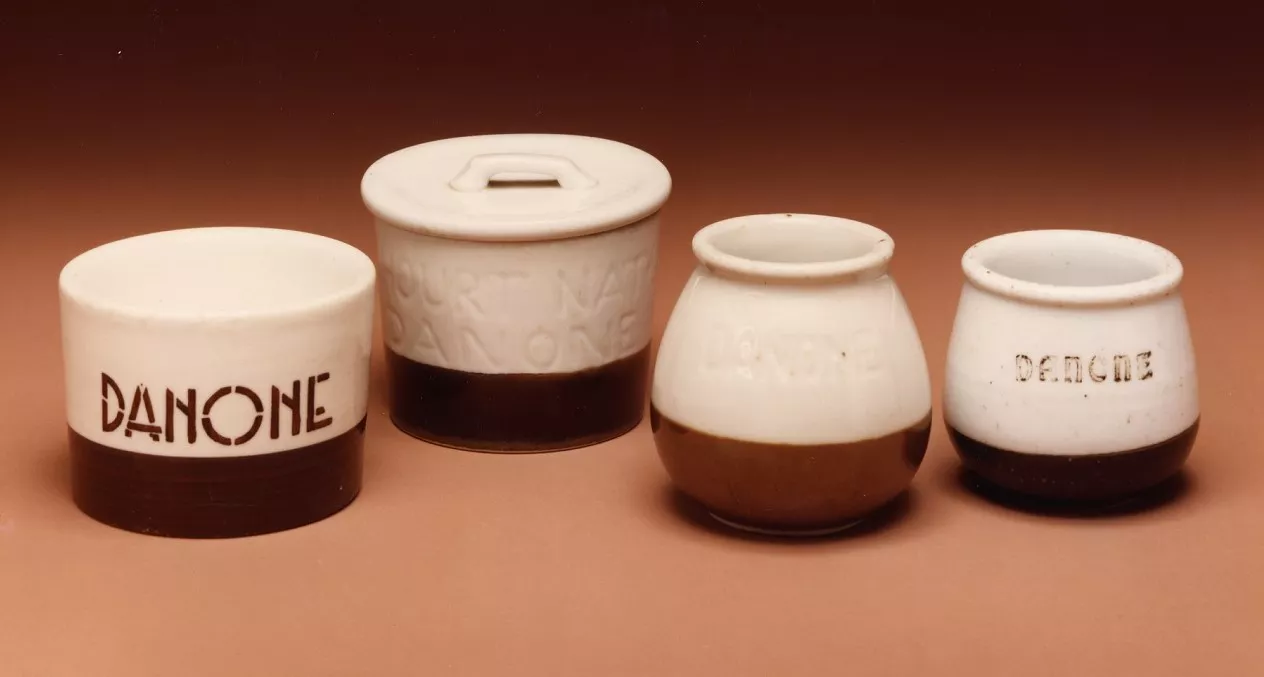
Danone’s story starts in a pharmacy. It’s 1919. The Treaty of Versailles has just been signed, European borders are being redrawn, and Isaac Carasso, born in Salonika (now Thessaloniki), is living in Barcelona.
Digestive illness is widespread across early-20th-century Spain, particularly among children. Carasso’s wife, Esther, is a physician. The connection between gut health and recovery is beginning to take shape, even as the science remains incomplete. Yogurt, largely unknown in Western Europe, is being studied at the Pasteur Institute for its probiotic potential. Carasso is sourcing live cultures directly from Pasteur scientists.
Danone begins as applied microbiology, not “traditional food.”
The name is personal. “Danone” comes from “Danon,” the Catalan nickname for Carasso’s son, Daniel. In 1929, Isaac hands him the business. Daniel moves it to Paris, scales production, and keeps health at the centre of the proposition. Later, his role in the merger with Gervais lays the foundations of the modern Danone group. What begins as a clinical intervention becomes one of Europe’s most influential food companies.
The House of Danone. Netflix, are you reading this?
From there, the company scales into a multinational through decades of acquisitions and divestments — moving in and out of categories as it sharpens around a single organising idea: health through food.
Which explains Danone’s plant-based strategy today.
When Danone acquired WhiteWave, bringing brands like Alpro and Silk into the group, it was buying a second operating system for the same underlying belief - health through everyday consumption.
In Europe, Alpro is a supermarket brand first. It sits next to dairy, not opposite it.
Which brings us neatly back down to the present, and to Alpro’s newest launch, Meal to Go.
On the surface, it looks familiar. A 500ml bottle, positioned as one meal, built around a standard nutritional grid. Launch coverage suggests an initial rollout in Belgium and Germany, with wider European expansion to follow.
It’s also the starting point for my conversation with Guillaume Millet, who oversees plant-based innovation across Europe.
Guillaume: Yes - and that’s intentional. You just made my week. We could almost stop here.
What you’re describing is exactly what I believe plant-based should be about. The goal is not to mimic dairy. If we do that, at best we’re a “me-better,” and at worst we’re a pale copy. The real value is when we recreate the experience, when we elevate it and bring new sensorial pleasure. That’s where plant-based is strongest. If we can provoke that reaction consistently, that’s a real win.
It was the right moment because three things aligned: a growing core Alpro business anchored in health, a real consumer problem around taste in existing meal-replacement offers, and the know-how to craft highly nutritious drinks with superiority on taste.
If you look at Instagram, 2026 looks a lot like 2016. Trends are cyclical. I’ve been in food long enough to know that.
Protein is absolutely here to stay. Some people say the protein craze will slow down, I strongly disagree. Protein will accelerate. GLP-1 drugs are becoming more widespread in Europe, and that will make protein even more relevant.
Within plant-based, this has implications for ingredient choices. Soy naturally contains more protein; almond less so. At the same time, we’re seeing the fibre gap become more visible, in Europe and in the US.
For me, it won’t be protein or fibre. It will be protein plus fibre.
Exactly. If you look back to the 1990s, fibre was about “transit.” Now fibre is being redefined around gut health, feeding the microbiota, improving immunity, and overall wellbeing. That’s the big shift.
So what does that mean for product development? Protein plus fibre. Plants become even more legitimate. And interestingly, when industries start adding fibre, whether to dairy or meat, it still has to come from plants. Fibre doesn’t exist in animal products.
That’s why I believe we’ll see a real re-framing of plant-based benefits, possibly even hybrid products, although those are harder to market.
Meat substitutes, cheese substitutes, ice cream substitutes, unless they bring a clear new sensorial experience. You can have all the health benefits in the world, but food has to offer something different.
Plant-based milk, on the other hand, is the most penetrated plant-based category in Europe. Almost half of European households already buy it regularly, and it keeps growing. I don’t see a ceiling there.
As for ingredients, pistachio will stay strong. Matcha is everywhere now, and the real question is what comes next. That’s where we’re going back to botanical studies, exploring what’s beyond coffee and matcha.
We have clear principles. We’re a big company. Our role isn’t niche innovation for its own sake. Our mission is to bring health to as many people as possible.
So we test ideas quantitatively with consumers. Is it appealing? Is it differentiating? And critically, is it easy to explain? If a concept takes 30 seconds to explain, it won’t stick, or it will require marketing investment that isn’t sustainable.
If a business isn’t sustainable, it becomes what I call “dream-washing”: great promises, but not built to last.
Affordability is also essential. We’ve launched products in the past that tasted great and tested well, but they were too expensive for daily consumption. That’s not aligned with our mission.
For example, I stopped our Alpro ice cream range five years ago. It was profitable, but not affordable enough for regular purchase. That decision came directly from our strategy.
Exactly. We focus on our strengths, plant-based milk and yogurt. That’s where we can scale impact.
We’ve tried almost everything: oat, almond, coconut, soy. Yogurt is fermented, and oats don’t ferment well, they become sour and starchy. Almonds tend to be bitter and watery.
You need a strong protein base. Soy is the best. Pea can work, but it requires more masking, often leading to more sugar.
My job is clarity. First, clarity on strategy and mission. Second, clarity on priorities. No more than three.
I don’t validate every TikTok or Instagram asset. I validate the brand framework; the look, the feel, the values. Then I trust teams locally.
Think of it like a football coach. You don’t play on the pitch. You set the strategy, define roles, and correct when needed.
Where I’m deeply involved is when it touches our core, health, regulation, or major reformulation. For example, last year we fortified all products with iodine. That required involvement from start to finish, including regulatory advocacy across Europe.
At senior level, if you’re in the weeds of every detail, you’re probably doing the wrong job. The real work is choosing the right people.
Paris Saint-Germain. Always.
Honestly, I don’t eat out much. My wife cooks extremely well. But generally: good Lebanese restaurants in Paris are consistently excellent.
For specialty coffee, Paris arrived late but now has a fascinating specialty scene. One place I love, very close to Danone HQ, is 48 Collagen Coffee. It’s more than coffee: a place to restore, with lots of plant-based food. I highly recommend it.
Professionally, I plan everything. Personally, I’m more spontaneous. I know I’ll go somewhere warm, and I love Portugal. The Algarve especially.